Rain Water harvesting and Recharging
Introduction
Kanyakumari district has an average rainfall of 1350mm; during monsoon the excess rainwater drains into sea, as there are not adequate storage system available. The ferrocemnt tanks are cheaper. The storage capacity of the idividual houses based on the family size and size of the catchment area is done during this period. Usually of the family size of 5 to 6 10000 liters tank was designed. The project area has continuous rain for 3 months and continuous non-rainy period is over a period of 4 months. So this factor was taken into consideration, and calculating the total requirement of water per day per family is 10 litres per day per person and for 6 months storage 10000 litres is sufficient. This is based on the roof of the house. If the roof area is 60 sq.m and average rainfall of 1400 mm, then 84,600 litres water can be harvested from the roof. Suitable recharging was planned to recharge the ground water with this excess water. The same technique was adapted to the community rainwater harvesting, and optimum storage capacity is 35,000.00 litres. The bacteriological and chemical quality of the water stored in the tank will depend initially on the quality of the water sent into the tank. If the tank is not open to further contamination, the stored water will in time purify itself of most of the harmful bacteria by natural process. The excess water comes out will be sent to ground water by selecting the topography of the land. It is presumed that the water from the roof may contain wind blown dust, bird and animal droppings and may not be free from human contamination. These impurities are usually carried away with the first flush of water, hence the first flush of rainwater should not be allowed in the tank. This can prevent diseases that are related to water. In short sickness and even death can be prevented when purified water is guaranteed. Any measure that reduces the risks of these diseases will therefore be of the greatest value to the people. The filtering system designed will prevent the entry of bacteria and prevent contamination. The mould designed for ferrocement tank construction will ease the beneficiaries to construct the tank in self-help way. The purpose of the project is to design the size of the tank for individual rainwater harvesting system and community rainwater harvesting system, which was optimized, based on the size of family, catchments area and available rainfall data. The ground water is monitored for its impurities when recharged.
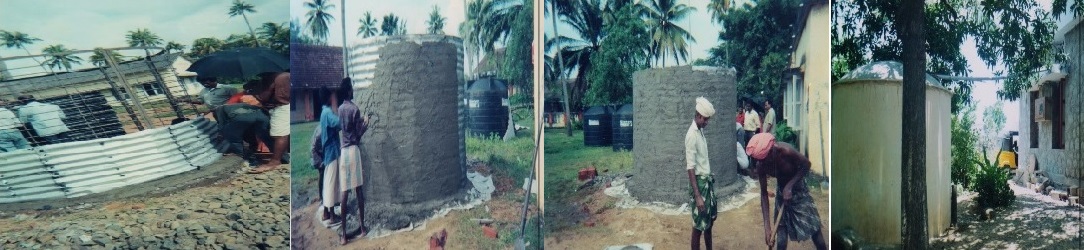
Ferrocement Water tank for rain water harvesting.
Sanitation:
We have participated in the total sanitation campaign with Govt of Tamilnadu. We have completed 3000 toilets in kanyakumari district along with DRDA Govt of Tamilnadu with people participation. We have given technical guidance to the people with training to complete the project successfully. Apart from this we have constructed 2000 toilets in tsunami affected areas of kanyakumari district with sustainable building technologies