Science and Technology Projects
STST : Skill Development Training Programme through science and Technology: Funded by DST, Govt of India , New Delhi
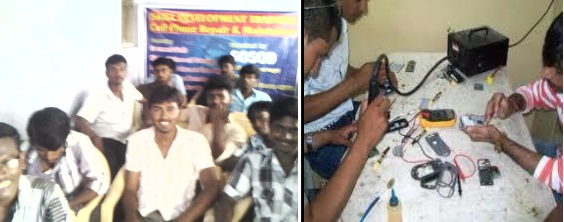
The beneficiaries are youths who are unable to continue their studies due to financial constraint. celphone repair and maintenance training which has lot of income generating potential. This project is aimed at improving the skill of the youths to get employment opportunities within project area, thus creating local employment. Training of 80 youths are completed and they are now employed and earned their livelihood. We have formed village committee to select the beneficiaries and trainees selection is done systematically. Since the training was completed arrangements were made to get the employment opportunities of the trained youths. We have given training through DIC to avail the loan from financial institutions, project preparation techniques, cost benefit analysis and to access the viability of the project. 50 youths are employed with the celphone service centers. The others are approaching financial institution to start their unit in the selected areas.
Objectives of the project:
- Imparting training to 80 unemployed youths from Tirunelveli and kanyakumari District in celphone repair and maintenance
- Conducting entrepreneur development and skill development program for the unemployed youths for creating employment opportunities.
- To guide unemployed youths and train them to approach financial institution to install income generating units with the acquired skill.
Improving livelihood of farmers of Kanyakumari District by production and application of biofertilizer (Azolla) and organic manure (Vermicompost)
Project Funded by: DST, SEED Division, Govt of India, New Delhi.
Objectives of the project:
The present project aims to the following objectives
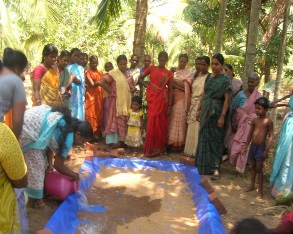
- To demonstrate the technology of the production of Azolla and organic manure and to demonstrate the application of Azolla and organic manure to rice and vegetable crops to the farmers from weaker sections and unemployed youths of Kanyakumari District at the model centre.
- To create an awareness about the biofertilizer and organic manures and the cost benefit analysis of the sustainable agriculture
- To train the 200 farmers and 20 unemployed youths in production and application of sustainable technologies (Azolla and vermicompost production) at their places as a self employment programme.
The technology of azolla cultivation is educated to the scheduled caste community
through the dissemination process. The paddy growing area in this district is 400
sq.km and in 20sq.km area is grown with vegetables. The farmers are using
chemical feritiliser for the paddy fields and the income from agricultural activity is
low and our survey reveals that the farmers require alternate technology to
increase their profitability. Due to this reason the paddy fields are converted into
coconut and cash crops. To retain the paddy fields in this district alternate
technology, this is environmentally sustainable is introduced. This project aims to
introduce the biofertiliser and vericomposting to the farmers and the unemployed
youths are pursued to take this as income generating activity so that the farmers
will get continuous supply of manure and cost of production will be decreased and
profit will be increased.
Their nitrogen-fixing capability of Azolla has led to it being widely used as a
biofertiliser, especially in parts of Southeast Asia. Indeed, the plant has been used
to bolster agricultural productivity in China for over a thousand years. When rice
paddies are flooded in the spring, they can be inoculated with Azolla, which then
quickly multiplies to cover the water, suppressing weeds. The rotting plant material
releases nitrogen to the rice plants, providing up to nine tonnes of protein per
hectare per year. Azolla are also serious weeds in many parts of the world, entirely
covering some bodies of water. The myth that no mosquito can penetrate the
coating of fern to lay its eggs in the water gives the plant its common name
"mosquito fern".
Most of the species can produce large amounts of deoxyanthocyanins in response to
various stresses, including bright sunlight and extremes of temperature, causing
the water surface to appear to be covered with an intensely red carpet. Herbivore
feeding induces accumulation of deoxyanthocyanins and leads to a reduction in the
proportion of polyunsaturated fatty acids in the fronds, thus lowering their
palatability and nutritive value.
This project is planned for sustainable agriculture with reducing cost of
production and planned for people participation. This project is planned for 2 years
duration with the following action plan.
The farmers from weaker section and the unemployed youths were involved
in the programme. During the first year 10 villages were selected based on the
cultivation of paddy is maximum in the village from Thovalai region. In the 10
villages 100 farmers were selected. After selection, the 100 farmers were trained in
the bio –manure preparation and application techniques. Those who have paddy
field were given preference in selection for the training program. The difference in
yield is tested and recorded. Another 10 youths were selected and trained for
installation of production unit. Initially awareness camp is conducted in the 10
villages. Then demonstration of the technology were done at the model farm.
Bio fertilizers are new generation cost effective and renewable sources of
plant nutrients to supplement chemical fertilizers. The role of bio fertilizer in
agriculture production assumes special significance, particularly in the present
context of very high cost of chemical fertilizer. Research finding have established
that up to 800 gms of bio fertilizers applied to one acre will fix 10 kg of atmospheric
nitrogen in the soil, which is equivalent to nitrogen available to crops through half a
bag of Urea. In terms of cost per acre, bio fertilizers worth Rs.20/- applied to the
crop reduced the requirement on urea worth Rs. 69/- even at the current highly
subsidized price.
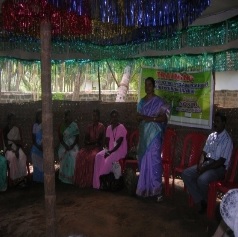
Training for Bio fertilizer production
Entrepreneurial development Activities with S&T Intervention
Funded by NSTEDB, DST, Govt of India, New Delhi
a) STED: Science and Technology Entrepreneur Development : Tuticorin
This project was funded by DST, NSTEDB, Ministry of Science and Technology, New Delhi. This will be the phasing out of the program in Tuticorin District: After completion of the four year of the project, we have developed the strategy to phase out and the entrepreneurs are linked with financial institutions and the DIC for their continuous support. The details of the technical inputs are handed over to the committee and it will monitor the progress of the project.
Specific Objectives of the Project
- To create awareness among the entrepreneurs in need based s&T interventions and the benefits of sustainable enterprise.
- To create 200 enterprise with S&T interventions and for creating sustainable enterprise
- To identify prospective entrepreneurs and to implement the S&T skill intervention in technology selection based on resources, technology upgradation and information dissemination.
- To improve the skills of the existing enterprises based on the need assessment.
- To implement the S&T interventions in the enterprise in rural and urban areas which enhances the quality of material and income.
The following are the activities we involved during the last four year of the project.
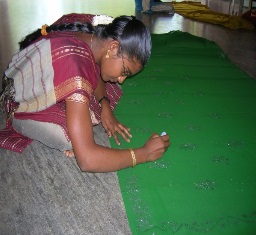
- Saree Painting
- Napkins production
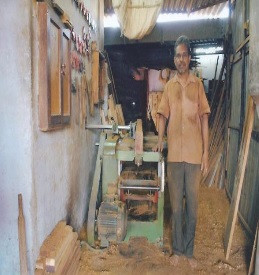
- Wood carving
- Match Box Inner Box Production
- Alternate building Materials
- Grills for the construction industry
- Brick kiln design
- Coir production
DATA of the trades completed during four years of successful intervention in Tuticorin District
| TYPE | No. of units |
|---|---|
| MANUFACTURING | 144 |
| SERVICE | 44 |
| OTHERS | 2 |
| TOTAL | 190 |
| AMOUNT OF INVESMENTS (RS.) | No. of Units |
|---|---|
| Upto 10K | 0 |
| 10K to 25K | 3 |
| 25K to 50K | 13 |
| 50K to 100K | 35 |
| Above 100K | 139 |
| TOTAL | 190 |
SOURCE OF FUND
| SOURCE | No. of units |
|---|---|
| OWN FUND | 47 |
| LOAN | 143 |
| TOTAL | 190 |
SOURCE OF LOAN
| SOURCE OF LOAN | No. of Units |
|---|---|
| PMRY & Bank | 88 |
| Other Govt. | 27 |
| Schemes | 32 |
| Banks | 33 |
| Fis | 10 |
Units with S&T Intervention
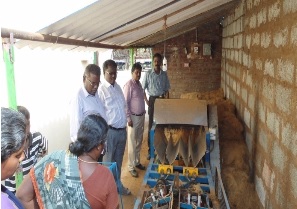
Inner Box Production
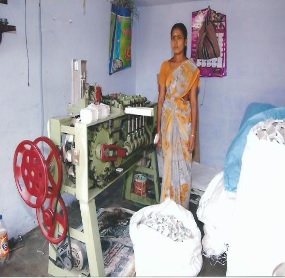
Wood Carving Unit
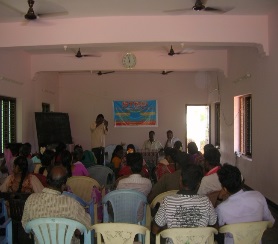
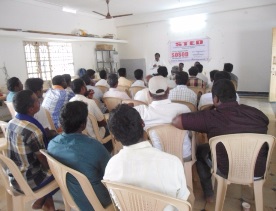
Awareness Camp on STED Tuticorin District.
Training on Saree painting
B.Entrepreneurial development Activities with S&T Intervention
Funded by STED, DST Govt of India New Delhi
STED location: Krishnagiri District of Tamilnadu
Profile of the District
'Krishna' refers to 'black' and 'giri' refers to 'hill'. Thus, 'Krishnagiri' refers to 'Black Hill'. This district is gifted with black granite hillocks and named as 'Krishnagiri'. Krishnagiri district covers an area of 5143 km². Krishnagiri district is bound by Vellore and Thiruvannamalai districts to the East, State of Karnataka to the west, State of Andhra Pradesh to the North and Dharmapuri District to the south The historical importance and potential growth in education, economy and tourism of present Krishnagiri made it necessary to create a separate district. Krishnagiri was formed as 30th district by the Government of Tamil Nadu. Krishnagiri district was carved out of Dharmapuri district on 09th February 2004 with five taluks and ten blocks.
Selected Trades
| Trades Selected for intervention | Basis for selection |
|---|---|
| Sericulture - Silk | Based on resources available |
| Banana fibre Products | Based on expertise available |
| Mosaic tiles and pavers | Marketing possibilities |
| Fly ash bricks technology | Possibility of Expansion of unit |
| Coir products | Applicability of S&T intervention |
Target proposed
| Details of unit | No of units planned for S&T Intervention | ||||
|---|---|---|---|---|---|
| Year | Year1 | Year2 | Year3 | Year4 | Total |
| Mosaic tiles manufacturing unit and precast concrete unit | 7 | 8 | 6 | 4 | 25 |
| Silk worm production and silk production- Sericulture | 6 | 8 | 8 | 11 | 33 |
| Coir manufacturing products. | 10 | 11 | 11 | 7 | 39 |
| Wood carving unit | 9 | 7 | 8 | 6 | 30 |
| Alternate building materials Precast rings unit- fly ash bricks unit. | 7 | 7 | 8 | 8 | 30 |
| Banana fiber manufacturing unit and palm leaves handicrafts. | 11 | 9 | 9 | 14 | 43 |
| Total | 50 | 50 | 50 | 50 | 200 |
S&T Intervention proposed during four years:
Unit: Alternate building Material and fly ash bricks:
Introduction of low cost new machine with resource from DA for utilization of fly ash for bricks, paving blocks and interlock blocks. Introction of MCR tiles machines in the concrete blocks units.
Wood carving Units:
Introduction of New Design and tools for in wood carving with the help of experts
Silk production and sericulture:
Separate rearing room for silk worm, use of mulberry braches as feed to worm, 100% use of disinfectant and supply of chawki worms with the help of TNAU Introduction of low cost weaving machines and screen printing machines and training the entrepreneurs.
Coir Products;
Spinning on Motorised Traditional Ratt and Motorised Ratt for the production of 2 plyx3 ply coir yarn, Production of coir geotextiles, frame mats, matting, carpets etc. with the help of coir board
Mosaic tiles and precast products:
Introduction of machines in the existing unit and eliminating the hand press techniques in mosaic tiles. Moulds in precast products in concrete frames for doors and windows. Introduction of ferrocement technology.
Banana fibre products
Introduction of new designs and products in banana fibre extraction techniques.
Implementation plan:
Appointment of core team of the project and training of the core team staff in the STED guidelines was done initially. Sensitization and awareness meeting was conducted in the project area with the help of local CBOs and industrial associations for the entrepreneurs. Training: selection of the proposed entrepreneurs was done with the help of CBOs and training was arranged in the wood carving and coir products with the help of resource persons. After training the proposal was prepared with the help of resource persons and the entrepreneur. Project report and Cost benefit analysis was prepared and w submitted to DIC and banks for financial support. Documentation was done and report was prepared.
Wood carving Units:
Introduction of New Design and tools for in wood carving with the help of experts
Silk production and sericulture:
Separate rearing room for silk worm, use of mulberry braches as feed to worm, 100% use of disinfectant and supply of chawki worms with the help of TNAU Introduction of low cost weaving machines and screen printing machines and training the entrepreneurs.
Coir Products;
Spinning on Motorised Traditional Ratt and Motorised Ratt for the production of 2 plyx3 ply coir yarn, Production of coir geotextiles, frame mats, matting, carpets etc. with the help of coir board
Mosaic tiles and precast products:
Introduction of machines in the existing unit and eliminating the hand press techniques in mosaic tiles. Moulds in precast products in concrete frames for doors and windows. Introduction of ferrocement technology.
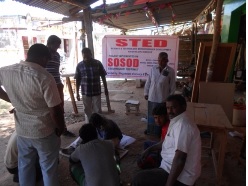
Awareness camp STED – With Entrepreuers at Bagal patty
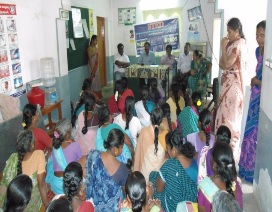
Awareness camp STED with Entreprenuers at Krishnagiri
Sustainable livelihood of the poor unemployed women of Agastheeswaram block by incorporating the waste paper recycling technology :
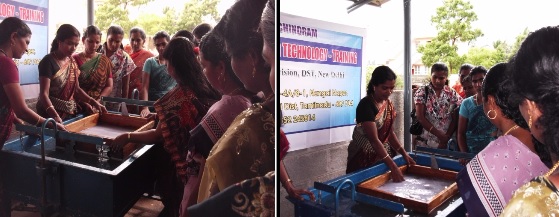
The waste paper recycling project is developed which will benefit the poor women and to create awareness of how each individual can help save our environment. It is a simple technology, the women can earn this technology easily and after training they can develop the unit for their sustenance. The raw materials are locally available waste materials and eco friendly technology and it creates employment opportunities for the local people. Cutting of trees will be prevented indirectly so this technology has good impact in the adjoining areas of the society.
The women are the members of the self help groups. The vulnerable women in the self help group need income generating activities for their sustenance. The women are underemployed and they depends mostly on agricultural labour activities which are seasonal. The poor women need alternate employment opportunities which can be created with this proposed technology. This technology of waste paper recycling is locally specific and the women can get good income by involving with this trade. The marketing of the product is assured as the paper has good marketing potential as good number of educational institutions is available nearby.
Regarding the technology low cost waste recycling machine is available from Development Alternatives. Today, 90% of paper pulp is made of wood. Paper production accounts for about 35% of felled trees, and represents 1.2% of the world's total economic output. Recycling of newsprint saves about 1 tonne of wood while recycling 1 tonne (1.1 ton) of printing or copier paper saves slightly more than 2 tonnes of wood. This is because kraft pulping requires twice as much wood since it removes lignin to produce higher quality fibers than mechanical pulping processes. Relating tonnes of paper recycled to the number of trees not cut is meaningless, since tree size varies tremendously and is the major factor in how much paper can be made from how many trees. Trees raised specifically for pulp production account for 16% of world pulp production, old growth forests 9% and second- and third- and more generation forests account for the balance. Most pulp mill operators practice reforestation to ensure a continuing supply of trees. It has been estimated that recycling half the world’s paper would avoid the harvesting of 20 million acres (80,000 km²) of forestland. The TARA mini paper recycling plant has been especially designed to create widespread awareness of how each individual can help save our environment. It is a complete - yet uncomplicated - technology package with which even a child can turn waste paper and cotton rags into useful and valuable products. At the same time, it eliminates pollution.
Funded by DST, STST, Govt of india New Delhi
This project is aimed at improving the skill of the youths to get employment opportunities within project area, thus creating local employment. The beneficiaries are youths who are unable to continue their studies due to financial constraint. Based on our application DST have sanctioned celphone repair and maintenance training which has lot of income generating potential. Training of 80 youths are completed and they are now employed and earned their livelihood. We have formed village committee to select the beneficiaries and trainees selection is done systematically. Since the training was completed arrangements were made to get the employment opportunities of the trained youths. We have given training through DIC to avail the loan from financial institutions, project preparation techniques, cost benefit analysis and to access the viability of the project. 50 youths are employed with the celphone service centers. The others are approaching financial institution to start their unit in the selected areas.
Objectives of the project:
- Conducting entrepreneur development and skill development program for the unemployed youths for creating employment opportunities.
- Imparting training to 80 unemployed youths from Tirunelveli and kanyakumari District in celphone repair and maintenance.
- To guide unemployed youths and train them to approach financial institution to install income generating units with the acquired skill.
Sustainable livelihood promotion to scheduled caste youths of Valliyoor
block through dissemination of MCR tiles production and marketing
technology.
Funded by DST, STST, Govt of india New Delhi
The MCR technology package is the result of global research and validated by
BMPTC. This technology is ideally suitable for unemployed youths. Micro concrete
Roofing is a cost effective aesthetic and durable alternative sloping roofing
technology. MCR technology is a result of global research and development effort.
The tiles are being marketed extensively in Latin America, East and West Africa and
South East Asia; over forty million tiles are installed. MCR is highly profitable for
micro and small-scale building material producers.
They can also produce cement blocks, jallys and concrete frames,
which will fetch them additional income for the trained youths. The MCR workshop
needs compact infrastructure. A standard three table operations can be stated in
60 sq.m shed including raw material storage, a curing tank and finished stock yard,
a site about 1000 sq.m is required.
Objectives of Project
- To create self-employment opportunities for 30 schedule caste youths from three villages of Valliyoor block by installing MCR tiles manufacturing unit.
- To install 3 MCR tiles making unit in one villages as income generating activities for the scheduled caste youths.
- To train 30 scheduled caste youths in MCR tiles and building materials production and marketing.
- To prevent the cutting of trees for burning the clay tiles by introducing alternate to clay tiles that prevents environmental degradation.
- To solve the problem of building materials by installing the MCR tiles unit, this improves the income of scheduled caste youths.

This project is funded by Department of Science and Technology, New Delhi. We have completed this project and report was submitted to DST with the presentation at GMW.
CLEAN INDIA PROJECT: Funded by Development Alternatives, New Delhi.
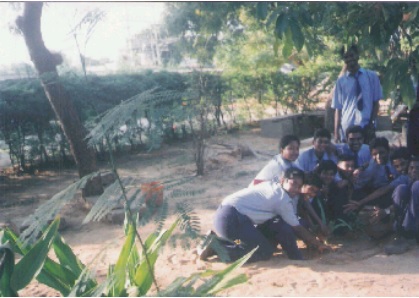
This project funded by European union through Development Alternatives. We are working in three districts and 12 schools and the school children are the partners of the project. During the project period we train 600 school children and 1800 women in the clean activities. We are proud to be part of the nation wide programme on environmental assessment, awareness, action and advocacy involve School Children and Communities.
Vision
Develop cleaner environments for towns and cities.
Objectives :
- Educate and train school children on environment assessment, awareness, action and advocacy.
- Systematically assess the environmental quality.
- Generate environmental awareness.
- Mobilise community networks and implement environmental improvement actions.
We follows the following methodology to fulfill the objectives
- Training on environmental quality assessment
- Monitoring and validation.
- Awareness and Networking.
- Action - individual level, Household level, community level, city level.
CLEAN INDIA PROJECT: Funded by Development Alternatives, New Delhi.
- Water
- Air
- Trees
- Herbal Treasures
- Bird Watching
- Bio Waste
- Energy etc.,
Intervention with Students
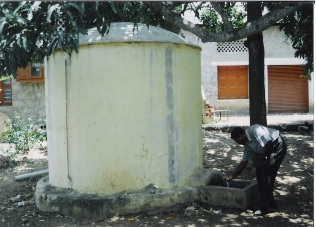
Developing a model of rainwater harvesting recharging system to combat ground water salinity in coastal Aquifers and solving drinking water problem.
Funded by DST, New Delhi
This is action research programme funded by DST, New Delhi. The PI of the
programme is Mr. John David Morris B.E., and implementation has good impact in
the project area on water issues.
Water is one of the essential requirements for the survival of human
beings. In kanyakumari District has an average rainfall 1400-1800mm which is
highest among all the districts of Tamilnadu, but during summer the people faces
acute shortage of drinking water and irrigating water. There is no proper storage of
rainwater system and recharging of water, the rainwater during rainy season.
The following are the specific objectives of the programme.
- Designing the suitable community and individual rainwater harvesting system using appropriate low cost model that reduces the drudgery of women who collect drinking water.
- Dissemination technology of rainwater harvesting for drinking purpose and recharging the ground water.
- Identification of suitable topography of land for recharging the rainwater to ground water.
- Prevention the intrusion of seawater into ground water by rainwater harvesting techniques.
- To educate the public the ill effects of extracting excess ground water.
We have success fully implemented this project in the project area and more awareness have been created among the general public and water quality has been monitored in the coastal areas and which has good impact in the adjoining areas.